
In brief
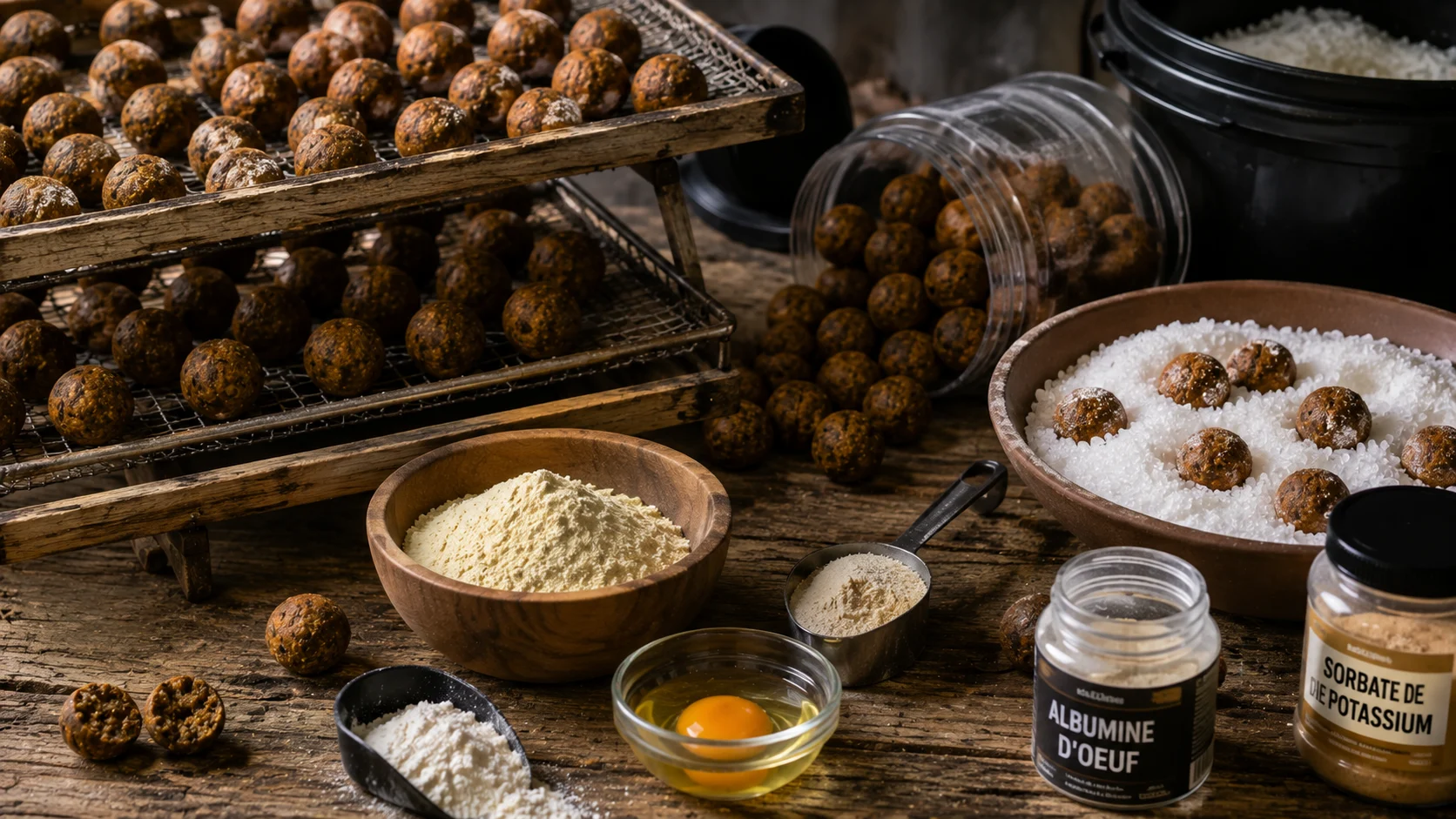
- Drying on racks in a cool, ventilated place is the most effective natural technique.
- Adding egg albumen or rice flour to the mix allows for ultra-resistant balls to be obtained.
- Steaming preserves the structure of the ball and promotes more even hardening.
- Coarse salt quickly dehydrates the bait while acting as a powerful attractant.
Why seek to harden your baits for fishing?
During a carp fishing session, it often happens that shop-bought or homemade balls are too soft. Balls that are too soft may break during casting or be prematurely destroyed by crayfish and catfish.
Fishing with well-hardened boilies ensures excellent hold on the hair throughout the night. Carp have pharyngeal teeth capable of easily crushing even the toughest shells: a hard ball will never slow their ingestion.
Air-drying techniques
The simplest method for drying boilies is to expose them to ambient air in a healthy, cool, and well-ventilated room.
Using racks or drying nets
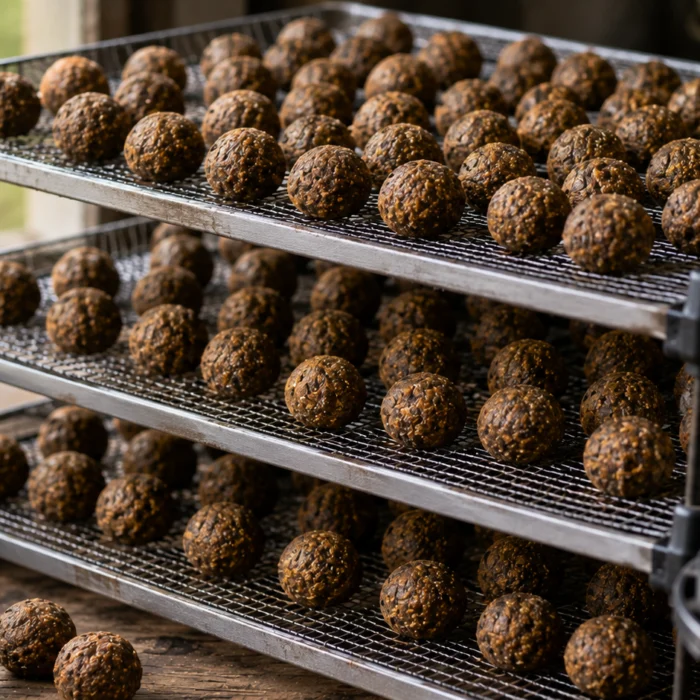
After shaping has been done with a boilie roller, arrange your boilies in a single layer on mesh trays or crates. This allows air to circulate perfectly all around the bait. A drying time of 48 hours to 4 days results in the ideal firmness. Be careful not to dry your boilies too quickly with a fan that is too powerful, as this may cause them to crack.
Drying shop-bought boilies
If you are using store-bought products that are too soft, simply take them out of their original packaging and leave them in the open air for a few days. For more information on managing your stock, see our guide: How to store boilies?.
Adjusting the recipe and cooking for hard boilies
Hardening starts from the preparation of the mix. If you have an inexpensive boilie machine, adjusting the formulation of your pastes will save you valuable time during drying.
- Egg albumin: The incorporation of albumin powder or hard-boiled egg whites significantly hardens the mix after cooking.
- Dense plant flours: Rice flour or semolina adds rigidity and mechanical density.
- Steaming: Prefer steaming over boiling water. Boiling water tends to soften the outer layer and wash out the flours, while steam sets the proteins without soaking the bait in water.
Complementary tips: salt and preservatives
There are other very effective solutions to quickly dehydrate your boilies:
- Treatment with coarse salt: Placing your balls in coarse salt allows water to be extracted by osmosis in just a few days, making your baits extremely hard.
- Preservatives and hardeners: Adding potassium sorbate or moisture regulators during kneading stabilises the ball, prevents mould, and accelerates its final hardening without compromising its aroma profile.
Comparison of methods to harden your balls
| Method | Time required | Level of hardening | Main advantage |
| Drying on trays | 2 to 5 days | Medium to strong | Simple and 100 % natural |
| Coated in coarse salt | 24 to 48 hours | Very strong | Cost-effective and attractive ingredient |
| Add albumin to the mix | Immediate after cooking | Extreme | Maximum resistance to unwanted elements |