
In brief
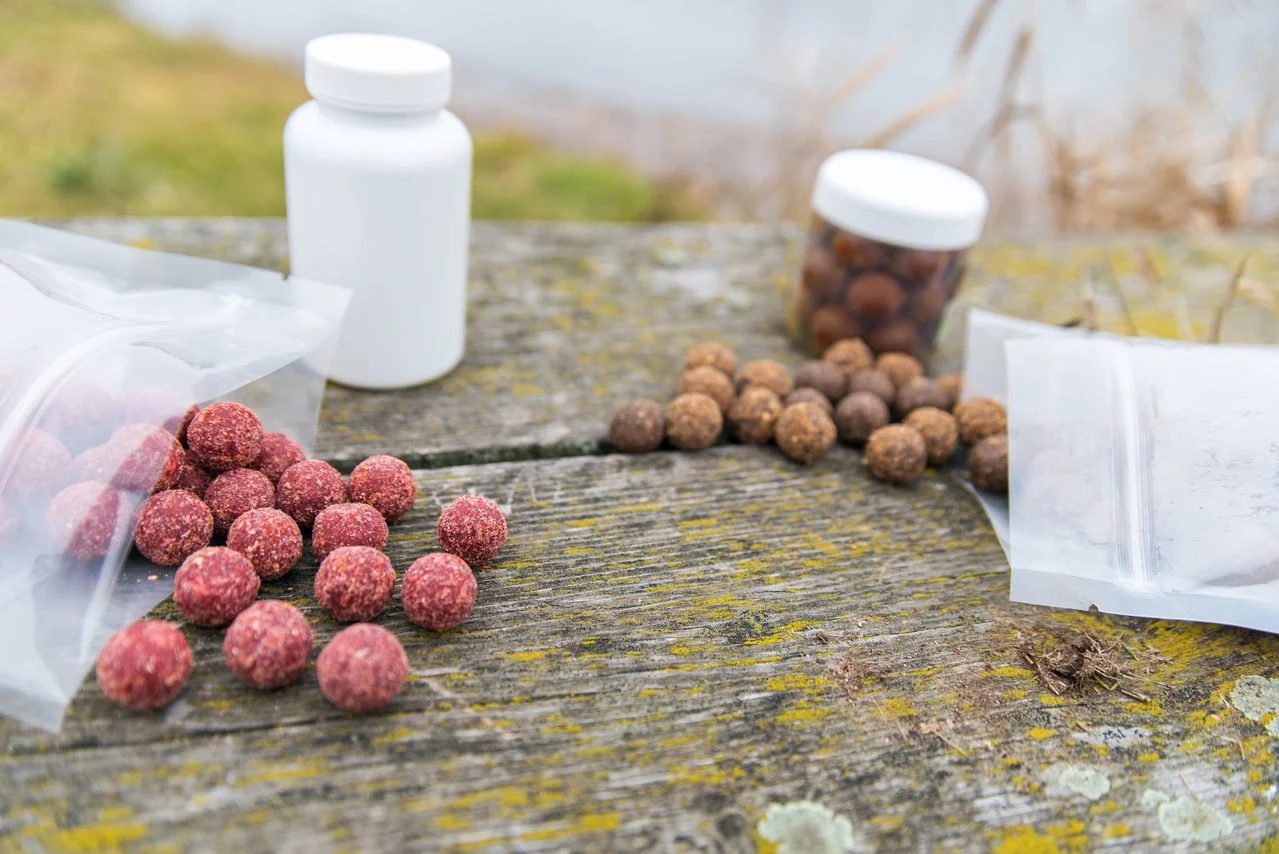
- A boilie is a sphere-shaped bait hardened by cooking, made from flours and eggs, specifically designed for carp fishing.
- Its invention dates back to the 1970 in the UK, thanks to the visionary work of Fred Wilton on high nutritional value (HNV).
- The hardening of the dough allows the bait to withstand unwanted small fish and remain effective underwater for several hours.
- Today, there are several ways to obtain this bait: buying it commercially, making it by hand, or automating its production.
Carp fishing has undergone numerous technical revolutions over the decades. Among these major upheavals is the emergence of the boilies has completely transformed the approach to catching this large cyprinid. Before delving into the historical and technical details, it is important to fully understand what it is.
Precise definition of the boilie
According to the Office québécois de la langue française and the Larousse dictionary, a boilie is a bait made up of a small ball of paste specifically used for carp fishing. This paste typically consists of an egg base, various plant or animal flours, and aromatic ingredients. The term comes from the verb “to boil”, directly referring to its manufacturing process: the paste is boiled to harden it.
This simple cooking process gives the bait an exceptional mechanical resilience once submerged. Its diameter most often varies between 14 and 24 millimetres, although some can be much smaller or much larger depending on the strategies employed by the angler.
The fascinating history and early experiments
Before the 1960s, anglers tracked carp using very basic baits like corn, potato, or raw paste. The major issue with raw paste was its very weak hook hold. It quickly disintegrated in the water and attracted a multitude of small silver fish (roach, bream) that destroyed it within minutes, forcing the angler to constantly re-cast their line.
It was in this context of frustration that British ingenuity struck. Enthusiasts began to search for a way to harden the outer coating of the bait while maintaining its appeal. The idea of briefly immersing the raw dough in boiling water then emerged as a true revelation.
The revolutionary invention of Fred Wilton
The real turning point of the __AM_TOKEN_N__history is set in the 1970 with the work of a British angler named Fred Wilton. He is universally recognised as the inventor of the modern boilie. Wilton did not merely cook up a paste; he introduced a rigorous scientific approach by theorising the concept of __AM_TOKEN_N__. High Nutritional Value (HNV).
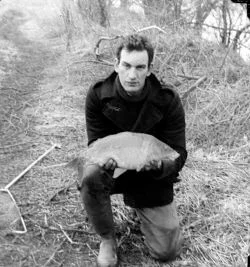
According to this revolutionary theory, if an artificial bait meets all the carp’s vital needs (providing a perfect balance of proteins, minerals, and vitamins), the fish will eventually recognise it as a __AM_TOKEN_N__. primary food source. Carp will even forsake their natural food to focus on these highly nutritious baits. This approach has revolutionised the fishing modern, allowing carp anglers to create a genuine long-term habituation.
Handcrafted with a boilie table
In light of the sometimes high cost of industrial baits, many enthusiasts choose to make their boilies by hand. To do this, the essential tool is the boilie table. After kneading the eggs and flours to achieve a smooth paste, the angler uses an extruder gun to form long cylindrical sausages.
These sausages are then placed on the ribbed table. By performing a back-and-forth motion with the upper part of the table, the sausage is sliced and rolled into perfect little spheres. This artisanal method requires a bit of practice and patience, but it allows you to use a simple and economical homemade carp boilie recipe perfectly suited to the specific conditions of the targeted water body. It’s a highly rewarding approach that ensures total control over the quality of fresh ingredients.
Buying ready-made boilies
Today, the simplest solution for many practitioners is to __AM_TOKEN_N__. buy ready-to-use boilies. From the 1990 onwards, with the explosion in popularity of this technique, the market was flooded with industrial products to meet all needs.
These commercial products offer an immense a variety of diameters, colours, and scents (fruity, meaty, creamy, spicy). The main advantage lies in their practicality: these balls generally contain preservatives that allow them to be stored for very long periods without the risk of mould. It’s an ideal solution for casual anglers who do not wish to commit to a time-consuming manufacturing process.
Automate production with a boilie machine
For anglers who heavily bait, manual rolling can quickly become an exhausting chore. The ultimate solution to save precious time and produce very large quantities of baits is to invest in __AM_TOKEN_N__. a boilie machine.
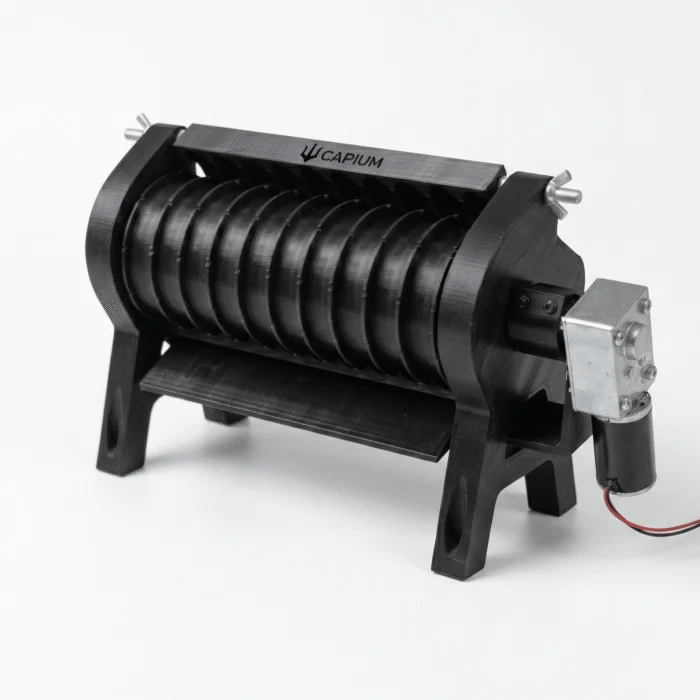
These motorised devices replace the manual action of the rolling table. The principle remains the same: dough strips are inserted into the machine, which takes care of cutting and rounding them at an impressive speed. One of the major benefits of these modern devices is their modularity.
Indeed, with these machines, you can set multiple roll different sizes to easily switch from a 14 mm pellet to a 24 mm pellet in just moments of handling. Automation ensures perfect consistency spheres, which is crucial for precise baiting with the cobra (boilie launcher) at long distances.
The evolution of recipes over time
Since Wilton’s early experiences, the composition of boilies has undergone several generations of evolution.
| Generation | Period | Main Features |
|---|---|---|
| Generation 1.0 | Years 70-80 | HNV baits very rich in milk proteins (casein, whey protein). Sometimes difficult for fish to digest. |
| Generation 2.0 | Years 90 | Bait made from basic plant flours (corn, soya, wheat). Less nutritious but highly flavoured for quick visual and olfactory attraction. |
| Generation 3.0 | Years 2000 | BNV baits (Balanced Nutritional Value) based on meat and fish meals. A perfect compromise between immediate attractivity and optimal digestion. |
| Generation 4.0 | Years 2020 | Increasing integration of insect floursreproducing the natural diet of carp as closely as possible with an excellent ecological balance. |
These changes prove that theorigin This bait was just a starting point for a continuous quest for improvement.
The ultimate impact on the fishing world
The invention of this boiled bait has had a resounding impact that has far exceeded the borders of the United Kingdom. Without boilies, modern tackle would not have developed in the same way. For example, the hair rig (which involves attaching the bait to a free line next to the hook rather than hooking it directly) has been developed specifically to match the hardness of the boilie.
Today, this bait has become the cornerstone of carp fishing. Whether fruity for quick fishing in summer, or heavily meaty for baiting in cold water, it adapts to absolutely every imaginable situation. Its ability to withstand underwater for 24 to 48 hours allows anglers to leave their lines in place with peace of mind, while waiting for the passage of the most wary trophy fish.